

From Startup to Enterprise: Building IT Foundations That Last
DGCpartners · · 3 min read
Building an IT infrastructure that truly supports business growth is not just about servers, software, or the cloud; it's about creating a system that scales effortlessly, stays secure, and evolves with your company's goals.
A well-architected IT foundation makes every future decision easier, from hiring remote teams to adopting new AI tools or entering new markets. The goal is to avoid the trap of rebuilding from scratch each time you expand.
TL;DR
To build an IT infrastructure that grows with your business:
- Start with scalable architecture and cloud flexibility.
- Prioritize data security and disaster recovery from the outset.
- Standardize processes and documentation.
- Invest in automation and monitoring tools.
- Choose hardware and software that integrate easily across teams and geographies.
Why Growth-Ready Infrastructure Matters
When your systems scale as you grow, teams stay productive, costs stay predictable, and downtime doesn't become a crisis. According to Gartner, over 70% of midsize companies experience growth slowdowns due to IT constraints rather than market constraints.
Flexible infrastructure doesn't just handle more users — it handles change: new applications, customer demands, and technologies.
Beyond Technology: Governance and Growth Partners
Sustainable growth depends on governance as much as technology. A reliable IT governance partner (like DGCpartners) can help design compliance frameworks, guide vendor selection, and structure IT policies that keep systems scalable and auditable.
Core Principles of Scalable IT Design
1. Start With Cloud-First Flexibility
A cloud-first strategy enables you to scale up or down quickly without overpaying for unused resources. Platforms like Microsoft Azure and Amazon Web Services make it easy to deploy, replicate, and secure environments globally.
2. Standardize Everything
Use consistent naming conventions, network architectures, and version control practices. Standardization ensures that onboarding new staff, merging departments, or launching in new regions happens without breaking systems.
3. Automate for Consistency
From infrastructure-as-code (IaC) tools like Terraform to automated patching with Ansible, automation ensures that changes are traceable and reversible. It's your insurance against human error and technical drift.
4. Monitor Proactively
Proactive monitoring means fewer surprises. Tools such as Datadog and New Relic let you identify performance bottlenecks before they impact customers.
Building Blocks: A Practical Checklist
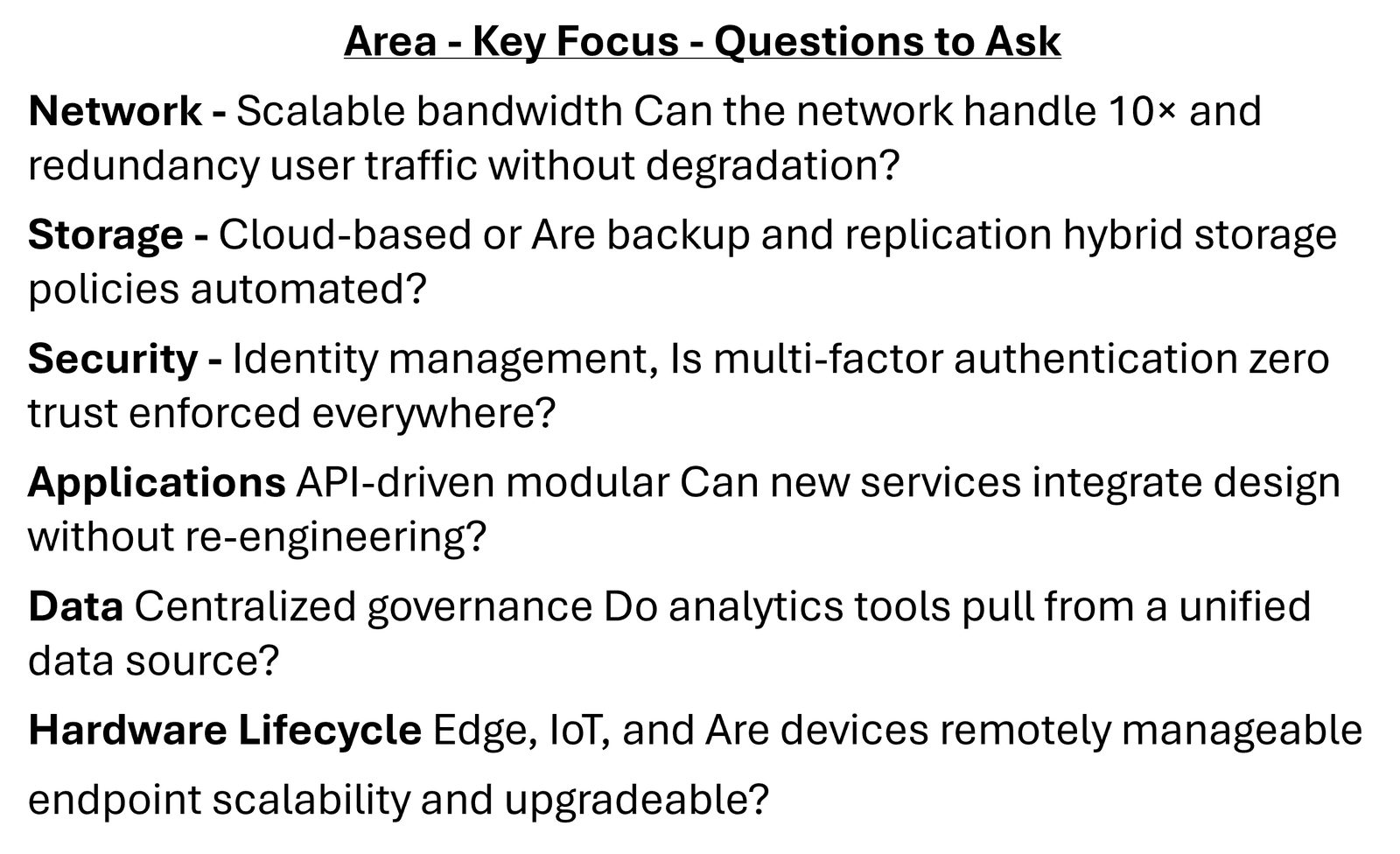
How-to: Designing for Scalability
- Map business objectives first. Align technology decisions with 1-, 3-, and 5-year growth goals.
- Adopt a modular architecture. Build services that can be swapped or upgraded without major rewrites.
- Implement centralized identity management. Use platforms like Okta or Google Workspace for unified access control.
- Invest in security early. A mature security posture saves money later — think continuous compliance, endpoint protection, and regular penetration testing.
- Document continuously. Growth exposes knowledge gaps. Keep your infrastructure-as-code, runbooks, and incident logs in sync.
Flexible Infrastructure at the Edge
As businesses grow, computing no longer happens only in the cloud. Edge computing brings power closer to operations — in factories, retail stores, and logistics centers — reducing latency and improving control.
To support this, scalable, industrial-grade edge computing hardware can help your IT infrastructure adapt seamlessly as workloads expand. For organizations deploying automation or IoT across global sites, you may consider this.
Such platforms are designed for real-time precision, seamless integration, and global deployment, enabling businesses to optimize processes, improve product quality, and grow efficiently across industries.
FAQ: Growing IT Infrastructure Without Growing Pains
What's the biggest mistake small companies make? Over-customization too early. Keep it simple and modular so it's easier to scale later.
How can I prepare for multi-region expansion? Choose cloud regions strategically, use global CDNs, and test latency-sensitive apps.
How often should I audit my infrastructure? At least twice a year — more if you're adding new services or compliance requirements.
Glossary
- Scalability: The ability of an IT system to handle increased load by adding resources without performance loss.
- Edge Computing: Processing data closer to where it's generated, reducing latency.
- Infrastructure-as-Code (IaC): Managing infrastructure using code and automation instead of manual processes.
- Zero Trust: A security framework requiring verification from everyone trying to access a network.
- Multi-Tenancy: Architecture that allows multiple clients (tenants) to share the same resources securely.
Final Thoughts
Your IT infrastructure should be a growth enabler, not a constraint. By designing for scalability, automating early, and choosing tools and partners that evolve with you, you future-proof your business against both technical debt and market turbulence.
Growth-ready IT isn't about buying more — it's about building smarter!